Welcome to the Mathematical World!
Bhaskara II
Bhaskara II (c. 1114 – c. 1185 CE)
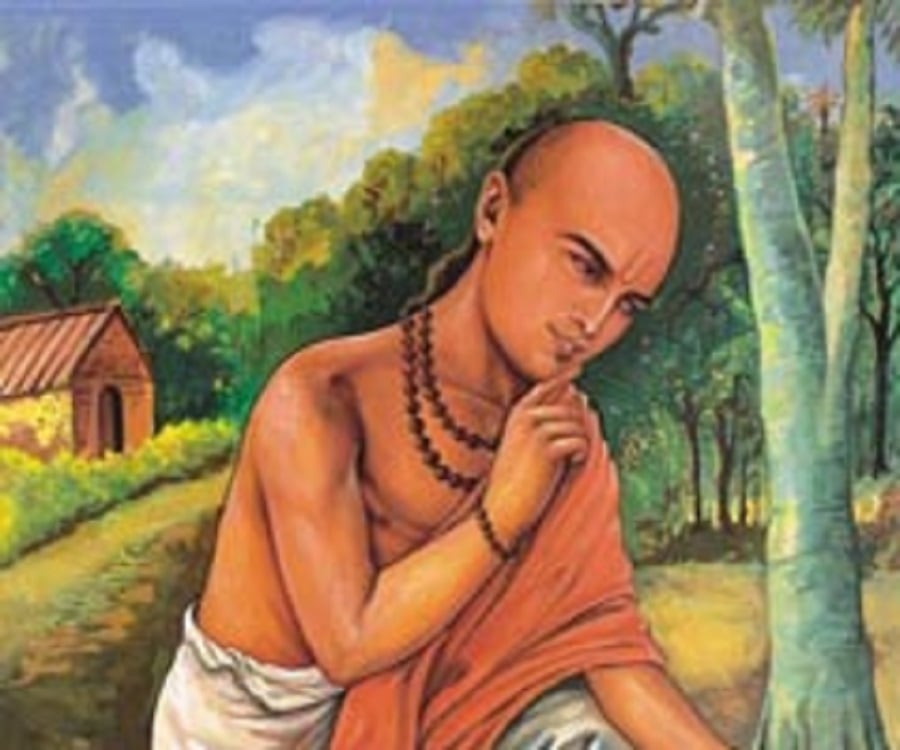
Bhaskara II, also called Bhaskaracharya, was one of India’s greatest medieval mathematicians and astronomers. Born in Bijapur, Karnataka, he inherited a rich tradition of Indian astronomy and became the head of the astronomical observatory at Ujjain, a major center of scientific learning.
Siddhanta Shiromani
Bhaskara II’s most famous work, Siddhanta Shiromani ("Crown of Treatises"), composed in 1150 CE, consists of four parts:
- Lilavati (Arithmetic)
- Bijaganita (Algebra)
- Grahaganita (Mathematics of Planets)
- Goladhyaya (Spherical Astronomy)
Each section demonstrates sophisticated mathematical methods and practical astronomical calculations.
Mathematical Contributions
Lilavati
- Introduced rules for basic arithmetic, including fractions and square roots
- Discussed permutations, combinations, and progressions
- Offered problem-solving techniques with poetic flair, enhancing accessibility
Bijaganita
- Detailed the solutions to quadratic, cubic, and indeterminate equations
- Described the Chakravala method for solving Pell’s equation — centuries before it appeared in European mathematics
- Applied surds, zero, and negative numbers logically and consistently
Early Concepts of Calculus
Bhaskara II hinted at differential calculus by describing instantaneous velocity and rates of change. He
stated
that:
"The change in the sine is proportional to the cosine," — an insight that predated Newton by over
500
years.
Astronomy and Instruments
- Improved calculations of planetary orbits and conjunctions
- Discussed lunar phases, eclipses, and calendar reform
- Described instruments like the gnomon and armillary sphere
Legacy
Bhaskara II’s works were used for centuries in Indian schools and later studied by Islamic and European scholars. His Lilavati remained a standard mathematics textbook well into the colonial period.

All rights reserved by the Mathematical Unity
Contact: +8801400044645
Email: mathematicalhorse1453@gmail.com
Our Discord Server: Mathematical Unity [Ulus Riyadiyat]